Simple before clever
The smallest structure that satisfies the requirement is preferred. Complexity is added only when a concrete constraint requires it, and it is documented when it is.
Information technology company
KETS CONSTRUCT works on software engineering, cloud and infrastructure, security practice, data systems and automation. The work is engineering-led: structures are chosen deliberately, decisions are written down, and the resulting systems can be operated by the teams that own them.
Section 01 — Introduction
KETS CONSTRUCT is an information technology company. We design, build, integrate and maintain software and the infrastructure it depends on. Our work spans the full lifetime of a system: from the first architectural sketch through implementation, deployment, observation and later modernisation.
We describe our approach rather than advertise outcomes. Every engagement is different, and the honest position is that quality comes from method — clear requirements, reviewed code, tested changes and documented decisions — rather than from any single technology choice.
This website is informational. It explains how we work, what we do, and how to reach us. It does not collect personal information, run marketing trackers or ask visitors to submit anything.
Section 02 — Capabilities
Design and implementation of server-side services, client applications and the interfaces that connect them, written to be read and maintained by other engineers.
Environment topology, networking, deployment pipelines and infrastructure described as code so that environments can be rebuilt rather than repaired by hand.
Threat modelling, access control design, dependency review and secure defaults applied while a system is being built instead of after it is finished.
Ingestion, transformation, storage design and reporting models, with attention to schema evolution, data quality checks and traceable lineage.
Removal of repetitive manual operations through scripted workflows, scheduled jobs, integration events and continuous delivery mechanics.
Architecture review, technology assessment and written recommendations that describe trade-offs, risks and the effort each option implies.
Section 03 — Expertise
Service boundaries, message handling, retry semantics and observability for systems that must keep working while parts of them fail.
Accessible, responsive front-end implementations built on component systems, typed contracts and predictable state handling.
Connecting business software, internal tools and third-party providers with documented contracts and controlled error paths.
Internal dashboards, administrative surfaces and diagnostic tooling that make production systems inspectable by the people who run them.
Section 04 — Method
Work begins with the problem, not the stack. We establish what the system must do, which constraints are fixed, and what failure looks like before selecting tools.
Delivery is incremental. Small, reviewed changes reach a working environment frequently, which keeps feedback short and prevents integration problems from accumulating into a single risky release.
Documentation travels with the code. Architecture notes, decision records and operational instructions are maintained in the repository so knowledge does not depend on individual memory.
Section 05 — Platform
Infrastructure is treated as a product with its own requirements. We describe environments in code, keep configuration under version control and make the path from a commit to a running service explicit and repeatable.

Section 06 — Security
Security is handled as an engineering property rather than a review stage. It informs how data is modelled, how services authenticate one another and how failures are surfaced.
Section 07 — Data
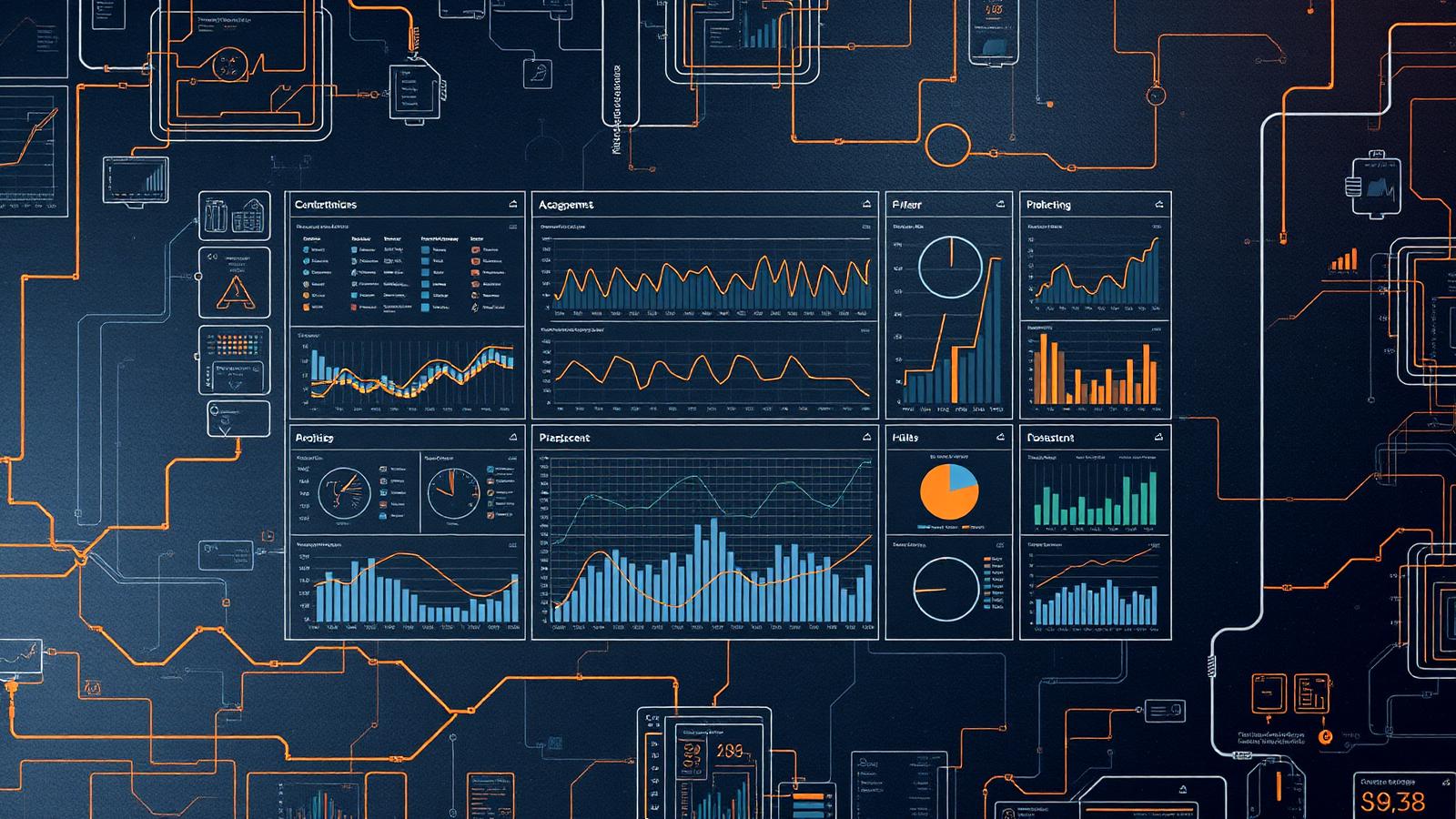
Ingestion and transformation pipelines, storage models suited to how the data is actually queried, validation rules that catch bad input early, and reporting layers that stay consistent as sources change. Lineage and ownership are recorded so a figure can be traced back to its origin.
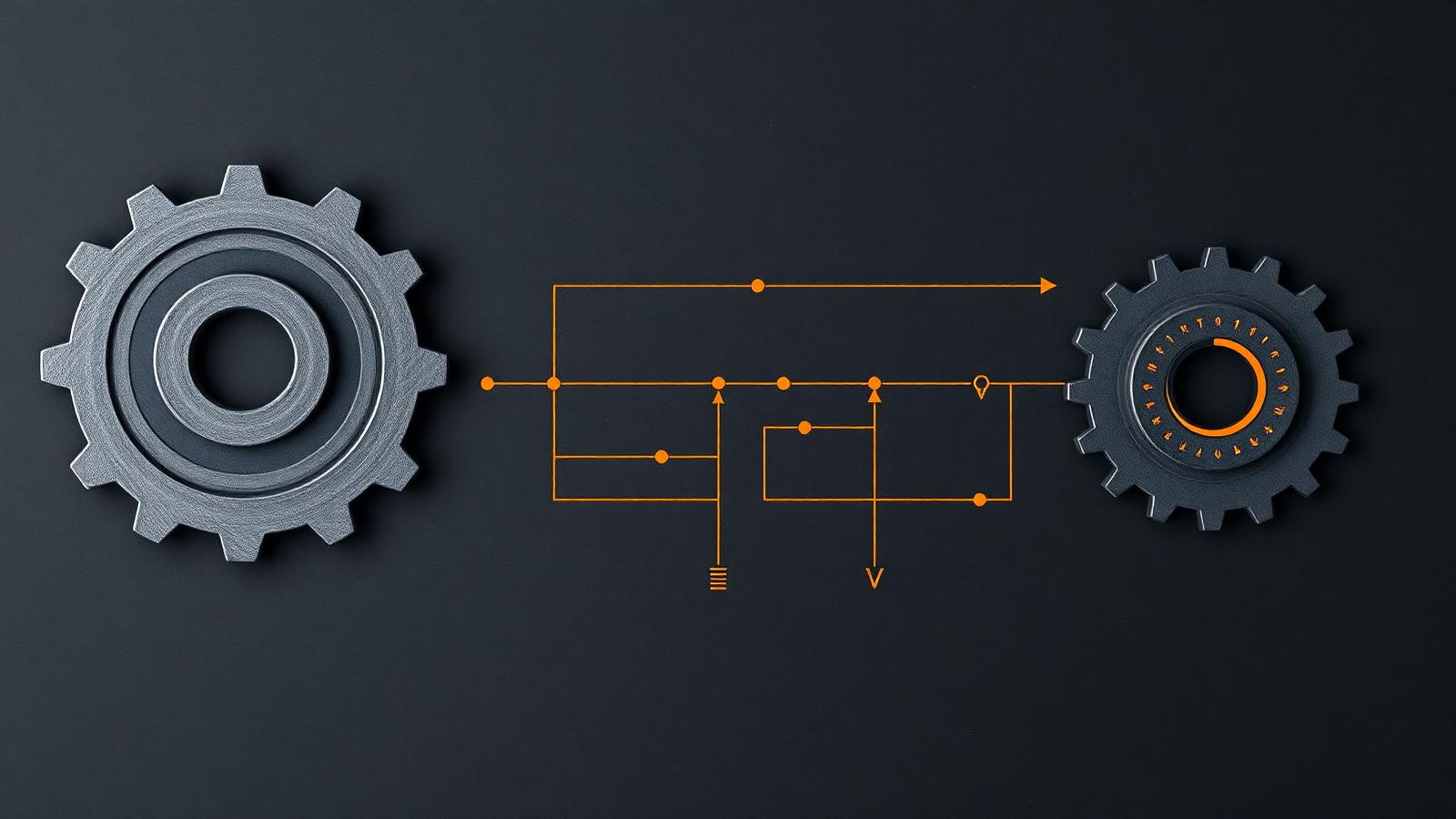
Manual, repeated operations are identified and replaced with scripted workflows, scheduled jobs and event-driven integrations. Automation is introduced where the process is already understood and stable, because automating an unclear process only makes it harder to inspect.
Section 08 — Context
The engineering practice is domain-independent, but every domain has its own vocabulary, regulations and operational rhythm. We learn those before proposing structure. The areas below are ones where the kinds of systems we build are commonly needed.
Section 09 — Process
Phase 01
Understanding the current system, its constraints, the people who depend on it and the outcome being asked for. Assumptions are written down and confirmed.
Phase 02
Selecting structures, boundaries and technologies. Alternatives are compared in writing so a decision can be revisited later with its reasoning intact.
Phase 03
Work proceeds in small reviewed increments. Each increment is tested, integrated and deployable rather than held back until a single large release.
Phase 04
Automated tests, manual review, security checks and performance observation against the behaviour agreed during discovery.
Phase 05
Documentation, runbooks and knowledge transfer, followed by maintenance work where continued involvement is requested.
Section 10 — Principles

The smallest structure that satisfies the requirement is preferred. Complexity is added only when a concrete constraint requires it, and it is documented when it is.
Where two options are comparable, the one that is cheaper to undo is chosen. Irreversible decisions receive proportionally more analysis.
Contracts, configuration and failure behaviour are stated rather than inferred. Hidden coupling is treated as a defect even when nothing is currently broken.
Logging, metrics and health signals are part of the feature, not an afterthought added when a system first misbehaves in production.
Section 11 — Quality
Quality is produced by the process, not inspected in at the end. The mechanisms below are applied continuously rather than reserved for a final review phase.
Unit, integration and end-to-end coverage proportional to risk, executed on every change through continuous integration.
Every change is read by another engineer before it is merged, with attention to readability, error handling and security implications.
Type checking, linting and dependency scanning run automatically so entire classes of defect are caught before review begins.
Reproducible builds, versioned artefacts and a documented rollback path for each deployment.
Section 12 — Statements
We publish no client names, awards, ratings or performance figures on this website, because such claims should be verifiable before they are made. What we can state is how the work is organised and what a client can expect to receive.
Section 13 — Contact
Correspondence is handled by email. Written enquiries describing the system, the constraint and the outcome you need allow us to respond with something more useful than a generic reply.
KETS CONSTRUCT
ElizabethRoss617@gmail.com
ketsconstruct.com